
How Can a Carbon Credit Exchange Support Sustainability Goals?
Carbon Credit Exchange Support Sustainability Goals
A carbon credit exchange is a marketplace where businesses and individuals can buy credits that support their sustainability goals. These credits are issued by projects that avoid or remove greenhouse gases from the atmosphere. These projects can range from a project that delivers cleaner cookstoves to families who risk fatal diseases while cooking on open fires in their homes to a forest conservation project that stops deforestation, preserves biodiversity and supports livelihoods for local communities.
Currently, there are four major ways that buyers can access carbon credit exchange. A company can buy them directly from a project developer via an Emission Reduction Purchase Agreement (ERPA). This allows for deep engagement with a project, and it provides buyers with access to carbon credits at a cost that is typically lower than the market price.
Another option is to purchase them through a retailer. Retailers offer a portfolio of carbon credits from a wide range of projects. They also maintain accounts on a project registry system and retire credits on behalf of their buyers. This is the most common way that companies can access the voluntary carbon market.
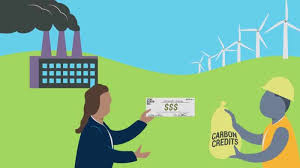
How Can a Carbon Credit Exchange Support Sustainability Goals?
Finally, companies can use carbon credits to meet their regulatory compliance obligations under a cap-and-trade system. In these systems, regulators set a maximum level of emissions that businesses can emit in a year, and companies that want to exceed the limit must look toward the markets for ways to offset their emissions by buying credits from others.
Today, the voluntary carbon market struggles with several challenges that impede its growth. First, high-quality carbon credits are scarce because verification methods and additional attributes vary amongst projects. Buyers can rarely find the right carbon credit to meet their needs, and matching them with suppliers is a time-consuming and inefficient process that’s often transacted over the counter.
A key to addressing these challenges is a more robust and efficient process for verifying, registering, and issuing carbon credits. The process should be streamlined to reduce costs, shorten payment terms, accelerate credit issuance and cash flow for projects, and improve credibility of project claims. It should also create a clear taxonomy of carbon credit attributes and standardize methodologies for assessing and rating project benefits.
The concept of carbon credit exchange has emerged as a powerful tool in the fight against climate change. With growing concerns about global warming, industries, governments, and environmentalists are seeking ways to reduce greenhouse gas (GHG) emissions. A carbon credit exchange system provides a market-based mechanism for mitigating climate impacts by incentivizing reductions in carbon dioxide (CO₂) and other GHG emissions.
Ultimately, a carbon credit exchange will help businesses and individuals make the best decisions about their sustainability investments by providing them with a clear, transparent and efficient way to buy and sell carbon credits. In the end, these exchanges will provide a critical tool for meeting global climate goals and driving the shift to a clean energy economy.


