
Does the B2B Market Include Financial Services Firms?
B2B Market Include Financial Services
The term B2B is thrown around frequently, but does the B2B market include financial services firms? In a nutshell, business-to-business (or B2B) marketing refers to transactions and commerce conducted between businesses rather than companies and individuals. This is in contrast to business-to-consumer (B2C) marketing, which focuses on selling products and services directly to consumers. the b2b market includes a wide variety of industries, including retail, telecommunications, manufacturing and healthcare.
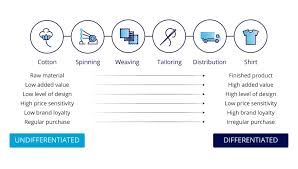
One of the biggest components of the B2B market is the supply chain of the manufacturing industry, which relies on a variety of different B2B providers to produce the raw materials needed for production. The raw materials, which can include anything from industrial gases to steel and concrete, are then sold to other manufacturing companies that use them to create finished products. This is the most common form of B2B commerce, and it takes place in many sectors of the economy.
Another major component of the B2B market is the sale of services, such as accounting, legal, information technology and consulting. These services are sold to companies of all sizes, and they are used to help the companies with their day-to-day operations. These services can be purchased from a wide range of B2B suppliers, including consultants and legal firms.
The financial services sector is a significant part of the B2B market, and it includes everything from investment banking to credit card companies to asset management and insurance firms. The B2B market also encompasses the payment processing industry, which provides services to merchants such as POS terminals and online payment gateways.
Does the B2B Market Include Financial Services Firms?
Despite the fact that the B2B market is made up of a number of different segments, it is still a relatively small market when compared to the total size of the global economy. As a result, it can be difficult for B2B marketers to find success in the space. Fortunately, advances in customer data platforms and other tools are helping to make it easier for B2B marketers to deliver personalized experiences that drive real business results.
B2B marketers must understand the differences between their target audience and the consumers they are trying to reach. In addition to understanding the buyer persona, they must also be aware of how each audience segment makes purchasing decisions and what drives them to interact with a brand. For example, a company that sells a product that has several different stakeholders may need to create a campaign with varying levels of content for each audience, depending on how the decision-making process unfolds.
The complexities of the B2B market require marketers to be creative in their approach to targeting and engagement strategies. This is especially true for the financial services industry, where customers are often c-suite and board-level professionals who must make significant purchasing decisions on behalf of their organizations. Using customer data platforms to consolidate data and speak directly to each buying committee member is critical for financial services brands looking to succeed in the B2B space.


