
Reliability of Micro Vias in Renewable Energy Systems
Micro Vias in Renewable Energy Systems
The increasing demand for more powerful and efficient electronic devices to power our daily lives is driving the need for advanced printed circuit boards (PCBs). One of the most critical factors that impact the performance and reliability of these devices are micro vias.
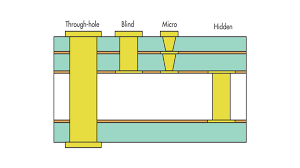
Designed to offer more circuit connections in smaller spaces, microvias provide pathways for electrical signals and power between layers of a PCB. These pathways reduce manual routing time and make it easier to integrate more complex features into a smaller space. However, the increased density of microvias poses challenges when it comes to their reliability, particularly as they are subjected to thermal and mechanical stress.
The use of a conductive copper filling for microvias is essential to the electrical performance and reliability of these pathways. This material is typically applied using an electroless copper plating process that ensures uniform micro coverage of the via walls. The thickness of the copper foil used to form these fillings has a significant impact on the conductivity and heat dissipation capabilities. Designers need to strike a balance between the conductivity requirements of the micro vias and the ability to meet the required thickness with the limitations of the drilling and metallization processes.
Reliability of Micro Vias in Renewable Energy Systems
Another factor that impacts the reliability of microvias is the underlying substrate material. The material must be able to withstand the stresses placed on the PCB during manufacturing and operation, as well as offer sufficient mechanical strength. Additionally, the material must be compatible with the drilling and metallization processes and provide adequate thermal properties.
The most common location for microvia failures is at the plated interfaces between stacked microvias, and at the interface between a buried microvia and its capture pad. These failures are typically due to high stress on the thin copper plating, as a result of thermal cycling, resulting in metal fatigue.
In addition, the number of lamination cycles that a buried microvia must undergo to support long-term reliability can also impact its reliability. The additional lamination steps increase the stress on the structure, which can lead to cracking and deterioration. To support long-term reliability, designers must be sure to plug buried microvias with epoxy after each lamination cycle.
The reliability of microvias is essential to the integrity and functionality of the circuit board. To ensure that these important structures meet the needs of the end-user, specialized testing must be performed on the PCBs. This includes electrical testing to verify the continuity and resistance of the microvia connections, as well as thermal and mechanical stress testing to ensure that the PCBs will be able to withstand operating conditions. The testing process can be lengthy, as the test equipment must be calibrated to ensure consistent and accurate measurements. The test data is then analyzed to identify any potential issues that could arise in the field and require a return or repair. This testing is crucial to the continued adoption of microvia technology and the growth of the electronics industry.