
What role does copper thickness play in rigid flex rigid pcb?
copper thickness play in rigid flex rigid pcb
In the realm of printed circuit board (PCB) manufacturing, copper thickness is a critical factor that significantly influences the performance, reliability, and functionality of rigid-flex-rigid PCBs. Copper serves as the primary conductor in PCBs, facilitating the transmission of electrical signals between components and traces. The thickness of the copper layer plays a crucial role in determining the electrical characteristics, thermal management, mechanical stability, and overall quality of the PCB.
One of the primary roles of copper thickness in rigid flex rigid pcb is to provide adequate electrical conductivity. Thicker copper layers offer lower resistance, allowing for more efficient transmission of electrical signals and power throughout the board. This is particularly important in high-current applications or circuits with demanding electrical requirements, where minimizing voltage drop and power loss is essential for maintaining performance and reliability.
Moreover, copper thickness influences the impedance characteristics of the PCB, which is crucial for ensuring signal integrity and minimizing signal distortion. Impedance control is essential in high-speed digital circuits, RF applications, and transmission lines, where precise impedance matching is necessary to prevent reflections, signal attenuation, and electromagnetic interference. Thicker copper layers help achieve the desired impedance values, providing stable and consistent electrical performance across the PCB.
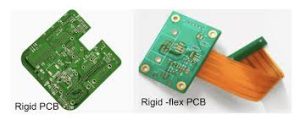
What role does copper thickness play in rigid flex rigid pcb?
Additionally, copper thickness plays a significant role in thermal management within rigid-flex-rigid PCBs. Copper is an excellent conductor of heat, allowing for efficient dissipation of thermal energy generated by electronic components during operation. Thicker copper layers provide greater thermal conductivity, enabling heat to spread more evenly across the board and dissipate into the surrounding environment. This helps prevent localized heating, hot spots, and thermal stress, which can degrade component performance and reliability over time.
Furthermore, copper thickness contributes to the mechanical stability and durability of rigid-flex-rigid PCBs. Thicker copper layers offer increased mechanical strength and rigidity, providing better support and reinforcement for traces, vias, and components. This is particularly important in flexible sections of the PCB, where mechanical stresses such as bending, twisting, and stretching may occur during handling, assembly, or operation. Thicker copper layers help prevent damage or fatigue in these areas, ensuring the structural integrity and longevity of the PCB.
Moreover, copper thickness influences the manufacturability and cost-effectiveness of rigid-flex-rigid PCBs. Thicker copper layers require more time, energy, and resources to deposit, etch, and process during fabrication, increasing manufacturing complexity and cost. However, thicker copper layers also offer advantages in terms of reliability, performance, and durability, which may justify the additional investment for certain applications.
In conclusion, copper thickness plays a multifaceted role in the performance, reliability, and functionality of rigid-flex-rigid PCBs. From providing electrical conductivity and impedance control to facilitating thermal management and mechanical stability, copper thickness influences various aspects of PCB design and manufacturing. By carefully considering the electrical, thermal, mechanical, and economic factors associated with copper thickness, engineers can optimize the design and performance of rigid-flex-rigid PCBs for a wide range of applications.